Winter can expose roofing problems that were easy to overlook during warmer, drier weather.
For homeowners in Southwest Washington and Northwest Oregon, preparing a roof for winter is often less about preparing for months of heavy snow and more about making sure the roofing system can properly handle repeated rain, wind, moisture, falling leaves and branches, and occasional freezing conditions.
A small flashing problem, clogged drainage area, damaged shingle, or existing leak can become much more noticeable once wet weather settles in.
The good news is that many potential problems can be identified before winter weather exposes them. Here are some of the most important areas to check.
Inspect the Roof Before the Wettest Weather Arrives
Start by looking for visible changes to the roofing surface.
Many observations can be made safely from the ground using binoculars or from another appropriate vantage point. Homeowners do not need to walk on the roof to perform a basic visual check.
Look for:
- Missing shingles
- Lifted or damaged shingles
- Cracked or visibly deteriorated roofing materials
- Loose or damaged flashing
- Fallen branches
- Heavy accumulations of leaves or needles
- Moss growth
- Damaged vents or other roof penetrations
- Gutters that appear loose or damaged
If something appears unusual, a professional inspection can determine whether it requires maintenance or roof repair.
Wet, moss-covered, steep, or damaged roofs can be hazardous to walk on, so roof-level inspections are generally best left to someone with the appropriate equipment and experience.
Pay Attention to Flashing
Roofing materials cover most of the roof, but many leaks begin at transitions and penetrations.
Flashing is used in areas where the roofing system needs to direct water around or away from another building component.
Depending on the home, flashing may be present around:
- Chimneys
- Skylights
- Plumbing vents
- Roof-to-wall intersections
- Valleys
- Other roof penetrations and transitions
Damaged, displaced, corroded, or incorrectly installed flashing can create an entry point for water.
If you have previously had a leak around a chimney, skylight, wall, or vent, it is particularly worthwhile to have that area evaluated before extended wet weather returns.
Repeatedly applying caulk or roofing cement is not necessarily a substitute for correcting damaged flashing.
Keep Gutters and Downspouts Clear
Gutters and downspouts help move roof runoff away from the building.
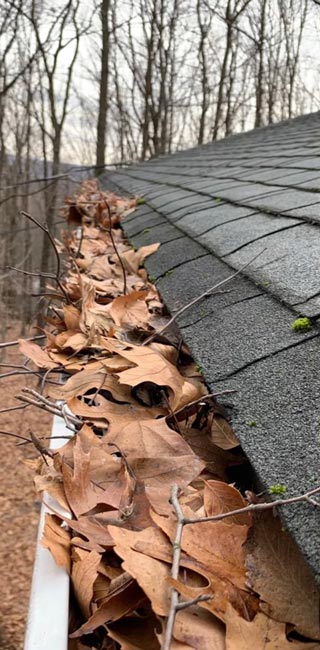
Leaves, needles, twigs, and other debris can restrict that flow, which is why gutter cleaning is particularly important on properties surrounded by trees.
Before winter, check that gutters are:
- Free of significant debris
- Securely attached
- Properly connected at joints
- Able to drain through the downspouts
- Not visibly damaged or sagging
Downspouts should also discharge water appropriately rather than depositing it where it can create drainage problems around the home.
Keeping gutters clear helps the roof’s drainage system move water where it is intended to go.
Remove Leaves, Needles, and Other Roof Debris
Organic debris should not be allowed to remain piled on an asphalt shingle roof.
Leaves and needles can collect in valleys, behind chimneys, near roof penetrations, and in other areas where water needs to drain freely.
Debris can also retain moisture and create conditions favorable to moss and other biological growth.
Appropriate roof cleaning and maintenance can help remove accumulated material and identify roofing problems that may otherwise remain hidden beneath it.
Cleaning methods matter.
Aggressive pressure washing or abrasive cleaning can damage asphalt shingles. Roof cleaning should be performed using methods appropriate for the roofing material and consistent with applicable manufacturer recommendations.
Address Moss Before It Becomes a Larger Problem
Moss is a common concern on damp or shaded roofs.
It requires moisture to grow and can become established in areas that receive limited sunlight or remain wet for extended periods.
Moss on an asphalt shingle roof is more than a cosmetic issue. Established moss can interfere with the way shingles shed water and can hold additional debris on the roof.
Before winter, look for areas where moss growth is becoming established, particularly:
- North-facing roof sections
- Areas shaded by trees
- Roof valleys
- Areas beneath overhanging branches
- Sections that remain damp longer than the rest of the roof
Avoid aggressively scraping moss from shingles or using a pressure washer.
If substantial moss growth is present, professional cleaning can help determine an appropriate method for the roofing material.
Check the Roof After Leaves Have Fallen
A roof can look relatively clear in early fall and accumulate a significant amount of debris after nearby deciduous trees shed their leaves.
For homes surrounded by mature trees, it can be useful to check the roof and gutters again later in the season.
Pay particular attention to valleys and areas behind chimneys or other roof projections.
These are locations where leaves and needles can accumulate and interfere with drainage.
For homes throughout Southwest Washington, tree coverage and seasonal debris can make this an especially useful part of winter roof preparation.
Trim Problematic Tree Branches
Branches hanging directly over or touching the roof can contribute to several roofing concerns.
They may:
- Drop leaves and needles onto the roof
- Rub against roofing materials
- Provide additional shade that allows the roof to remain damp longer
- Break during wind or storms
- Fall onto the roof
Dead, damaged, or problematic branches should be evaluated before winter storms arrive.
Large tree limbs or branches near electrical lines should be handled by qualified tree-care professionals rather than treated as a homeowner roof-maintenance project.
The objective is not to remove every tree near a house but to reduce obvious hazards and unnecessary roof contact.
Look Inside the Attic for Signs of Moisture
The attic can provide important clues about roof and moisture problems that are not visible from outside.
When it can be accessed safely, look for signs such as:
- Water stains on roof decking
- Wet or damp insulation
- Darkened wood
- Moisture around roof penetrations
- Visible deterioration
- Evidence of previous leaking
- Condensation or excessive moisture
A stain does not always reveal exactly where water entered the roof. Water can travel along decking, framing, or other materials before becoming visible.
Attic moisture also is not always caused by an exterior roof leak.
Indoor moisture entering the attic, inadequate air sealing, improperly terminated exhaust ducts, and ventilation issues can contribute to moisture problems.
For that reason, the source should be identified before deciding on a repair.
Check Attic Insulation and Air Sealing
Roof performance during winter is connected to what is happening below the roofing materials.
In vented attic systems, insulation and air sealing help limit unwanted heat transfer and the movement of warm, moist indoor air into the attic.
If insulation is missing, disturbed, compressed, or uneven, or if significant air leaks exist between the living space and attic, a home-energy or insulation professional may need to evaluate the condition.
Homeowners should not simply cover every opening in an attic. Intended ventilation pathways need to remain unobstructed in a vented roofing assembly.
This is an area where understanding the design of the home is more important than applying a one-size-fits-all solution.
Make Sure Exhaust Fans Vent Where They Should
Bathroom and other exhaust systems should not intentionally discharge moist indoor air into the attic.
Introducing moisture into an attic can contribute to condensation and moisture problems.
If you discover a bathroom exhaust duct terminating inside the attic rather than being properly vented outdoors, have the installation evaluated and corrected by an appropriate contractor.
This is not necessarily a roofing defect, but it can affect the condition of the roof deck and attic.
What About Snow and Ice?
Snow and freezing weather can occur in the Portland-Vancouver area, but prolonged heavy snow is not the primary winter condition most local roofs experience every year.
When snow does occur, homeowners should understand the possibility of ice dams.
Ice dams can develop when heat reaching the roof causes snow to melt and the water subsequently refreezes near colder roof edges. Water can then back up behind the ice.
Proper air sealing, insulation, and appropriately designed ventilation in vented attic assemblies can help reduce conditions associated with ice-dam formation.
Homeowners should not climb onto an icy or snow-covered roof to remove ice themselves.
If an ice dam or unusual snow-related roofing problem develops, professional evaluation is the safer approach.
Watch for Leaks During the First Heavy Rains
One of the best times to discover an existing roofing weakness is unfortunately when the weather tests it.
During periods of sustained rain, occasionally check ceilings, upper walls, and accessible attic areas for signs of moisture.
Watch for:
- New ceiling discoloration
- Damp drywall
- Water around skylights
- Moisture near chimneys
- Wet attic insulation
- Water stains on roof decking
- Dripping or unexplained moisture
Do not assume a small ceiling stain is harmless simply because water is not actively dripping.
A recurring or expanding stain indicates moisture has been present and deserves investigation.
Our guide on when to call a professional for roof repairs explains when a roofing problem should receive professional attention.
Check the Roof After Strong Wind
Winter storms can loosen or remove roofing materials and move branches or debris onto the roof.
After a period of strong wind, visually check the property from the ground.
Look for:
- Shingles on the ground
- Missing areas of roofing
- Lifted roofing materials
- Fallen branches
- Damaged gutters
- Loose flashing
- New interior leaks
Do not assume the roof is damaged simply because a storm occurred. The purpose of the inspection is to identify visible changes that may warrant closer evaluation.
For homeowners with properties across the Portland metro, inspecting the roof after significant wind and rain can help identify localized damage before another weather system arrives.
Don’t Ignore a Leak Until Spring
If the roof develops a leak during winter, delaying evaluation for several months can allow additional moisture to enter the roofing or building system.
A roof leak does not automatically mean the entire roof needs replacement.
Depending on the problem and condition of the surrounding roofing, a repair may address:
- Damaged shingles
- Failed flashing
- Certain roof penetrations
- Localized storm damage
- A specific leak source
The important step is identifying why the water is entering.
Simply applying sealant to the area that appears wet may not correct the underlying problem.
When Should You Schedule a Professional Roof Inspection?
You do not necessarily need a professional inspection every time a leaf lands on the roof.
However, an inspection is worth considering if you notice:
- An active or recurring leak
- Missing or damaged shingles
- Damaged flashing
- Heavy moss growth
- Storm damage
- A fallen branch on the roof
- Unexplained attic moisture
- A change in the roofline
- Multiple areas of deterioration
- A problem you cannot safely evaluate from the ground
A professional inspection should identify the condition of the roofing system and explain which problems, if any, need attention.
Winter Roof Preparation Checklist
Before winter weather settles in, homeowners can review these basic items:
Roof surface
Look for visible damage, missing materials, moss, or accumulated debris.
Flashing
Pay attention to chimneys, walls, skylights, vents, and other roof transitions.
Gutters
Remove leaves, needles, and other material that can restrict drainage.
Downspouts
Confirm that water can flow through them and discharge appropriately.
Trees
Address dead, damaged, or problematic branches near the roof.
Attic
Look for moisture, staining, wet insulation, or other signs of a problem.
Insulation and ventilation
Watch for obvious disturbances or blocked ventilation pathways and obtain professional advice if the attic system appears problematic.
After storms
Check the roof and interior for new signs of damage or leaking.
A Little Preparation Can Prevent Surprises
Preparing a roof for winter is primarily about identifying existing problems and making sure water can move through the roofing and drainage systems as intended.
Homeowners cannot prevent every storm or every roofing problem, but they can reduce avoidable risks by keeping gutters and roof surfaces clear, addressing moss appropriately, watching for damaged materials, monitoring attic moisture, and repairing known problems before they become more extensive.
If you discover damaged shingles, deteriorated flashing, an active leak, or another concern, J&J Roofing & Construction can evaluate the condition and determine whether roof repair, maintenance, or another roofing solution is appropriate.