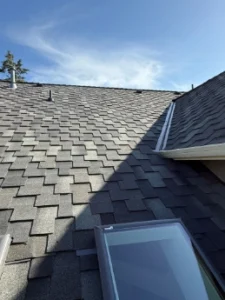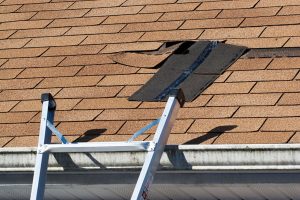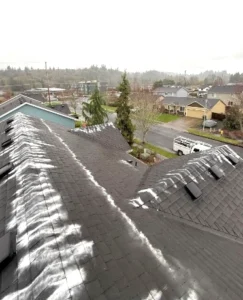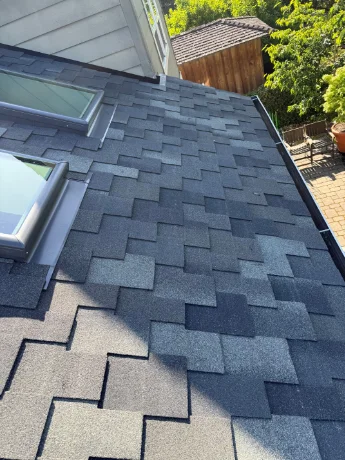
The roofing material, roof deck, underlayment, flashing, ventilation, valleys, penetrations, drainage, and installation workmanship all need to function together to protect the home.
That is particularly important in the Pacific Northwest, where roofs can spend long periods exposed to rain, moisture, wind, falling leaves and needles, and conditions that encourage moss growth on shaded surfaces.
J&J Roofing & Construction has served property owners in Washington and Oregon since 1984. Over that time, one principle has remained consistent: a roofing system should be evaluated and installed as a complete system rather than focusing only on the material visible from the street.
Start With the Condition of the Existing Roof
Before deciding how to address a roofing problem, it is important to understand what is actually happening.
A professional evaluation may include the visible condition of:
- Roofing materials
- Flashing
- Valleys
- Roof edges
- Chimneys
- Skylights
- Roof vents and pipe penetrations
- Drainage areas
- Accessible roof decking
- Attic ventilation
A localized problem may be suitable for roof repair, while widespread deterioration or other conditions may make replacement the more practical option.
The decision should be based on the condition of the roofing system rather than automatically assuming every leak requires a new roof.
A Roof Replacement Is More Than Installing New Shingles
When a roof replacement includes removal of the existing roofing, exposing the roof deck provides an opportunity to evaluate the surface underneath.
Damaged or deteriorated decking should not simply be hidden beneath a new roofing system.
J&J’s roof replacement process can include removal and disposal of existing roofing when tear-off is part of the approved project, evaluation of exposed decking, replacement of damaged decking when documented and authorized, and installation of the roofing system described in the proposal.
The exact scope depends on the home and the written project agreement.
That distinction is important because not every roofing project is identical.
Underlayment Provides an Important Layer Beneath the Roof Covering
Shingles are designed to shed water, but they are not the only layer of a steep-slope roofing system.
Roof deck protection and other underlayment products may be installed beneath the shingles as part of the specified roofing system.
Different areas of a roof can also require different components depending on roof design, manufacturer requirements, and project specifications.
The purpose is not to add materials simply because more layers sound better. Each component should have a defined role within the roofing system.
Flashing Is Critical Around Roof Transitions
Many roofing problems occur around transitions rather than across the open surface of a roof.
Flashing helps manage water around areas such as:
- Chimneys
- Skylights
- Roof-to-wall intersections
- Valleys
- Plumbing penetrations
- Roof edges
- Other roof transitions
A high-quality shingle cannot compensate for improperly installed or deteriorated flashing.
When J&J evaluates a roof, these details are part of determining where water may be entering and what type of work is appropriate.
The Roofing Product Matters, but So Does the Complete System
Homeowners have many roofing products to choose from, and different products offer different features, appearance, specifications, and warranty options.
J&J Roofing & Construction is a GAF Master Elite roofing contractor and installs GAF roofing systems for qualifying residential replacement projects.
Being a GAF Master Elite contractor also allows J&J to offer certain enhanced GAF limited-warranty options when the roofing system and project meet the applicable requirements.
Homeowners should compare the actual roofing system being proposed rather than choosing based solely on a brand name or a large warranty number.
Important questions include:
- Which shingles are being installed?
- Which roofing-system components are included?
- What underlayment is specified?
- How will flashing be handled?
- Is ventilation work included?
- What manufacturer warranty is available?
- What workmanship coverage applies?
- What conditions or exclusions apply to those warranties?
J&J’s roofing warranty information provides more information about the warranty options available with qualifying roofing systems.
GAF Master Elite Certification
J&J Roofing & Construction holds GAF Master Elite contractor status.
GAF states that only about 2% of roofing contractors in North America are invited to become Master Elite contractors.
The designation also matters because certain enhanced GAF warranty options, including the Golden Pledge Limited Warranty, are available only through qualifying GAF Master Elite contractors and qualifying roofing systems.
That does not mean every J&J roof automatically receives the same warranty.
The roofing products, system components, project eligibility, warranty selected, and applicable GAF requirements determine the coverage available for a particular project.
Installation Details Matter
Even a high-quality roofing product depends on correct installation.
Important details can include:
- Fastener placement
- Starter shingles
- Valleys
- Roof edges
- Flashing
- Penetrations
- Ridge materials
- Underlayment
- Ventilation components
- Drainage details
These components should work together according to the roofing-system specifications and the conditions of the particular home.
This is one reason evaluating a roofing contractor based only on the shingle brand or lowest estimate can leave out important differences between proposals.
Protecting the Property Is Part of the Roofing Project
Roof replacement generates old roofing material, nails, packaging, and other debris.
Property protection and cleanup therefore need to be part of the project planning.
On its replacement projects, J&J coordinates property preparation before work begins. The crews also complete cleanup and a final project review as part of the roofing process.
On homes served from J&J’s Vancouver, Washington roofing location, as well as projects throughout the company’s Washington service area, protecting landscaping, siding, driveways, and surrounding areas is an important consideration during tear-off and installation.
The specific preparation required depends on the home’s design, access, landscaping, driveway location, and roofing scope.
A Roofing Schedule Should Reflect the Actual Project
An old version of this article stated that an average J&J roof took three or four days to complete.
There is no need to promise a universal project duration.
Roofing schedules can vary because of:
- Roof size
- Roof complexity
- Weather
- Permitting
- Material availability
- Access
- Decking repairs
- Scope changes discovered during construction
A relatively straightforward project and a complicated multi-level roof should not be expected to follow the same schedule.
J&J coordinates scheduling as part of the project and communicates the planned scope before work begins.
For properties J&J serves throughout Portland, access can also differ significantly from one property to another. Compact lots, steep sites, landscaping, and complex rooflines can affect staging and project logistics.
Clear Communication Matters
Homeowners should understand what they are purchasing before roofing work begins.
A written roofing proposal should identify the planned scope and explain relevant project details.
Depending on the job, that may include:
- Roofing materials
- Roofing-system components
- Tear-off
- Decking allowances
- Flashing work
- Ventilation work
- Cleanup
- Warranty options
- Project exclusions
If additional deterioration is uncovered after roofing materials are removed, the homeowner should understand what was found and how additional work will be handled.
That is much better than assuming every possible hidden condition can be known before the roof is opened.
Your Roof Is More Than the New-Roof Installation
Installing a roof is only one part of owning it.
Over time, roofs can accumulate:
- Leaves
- Needles
- Branches
- Moss
- Other organic debris
The amount of buildup varies depending on shade, tree coverage, roof material, pitch, moisture, and the individual property.
J&J provides roof cleaning and moss removal services and evaluates the condition of the roof before recommending an appropriate cleaning or treatment method.
Roof cleaning should not be treated simply as a cosmetic service.
Removing loose debris can help keep valleys and drainage areas clear while also making it easier to observe the condition of the roofing materials underneath.
Maintenance Should Match the Actual Roof
There is no single roof-cleaning or maintenance schedule that is appropriate for every home.
A roof beneath mature trees may accumulate debris much faster than an exposed roof with little surrounding vegetation. A shaded roof may develop organic growth differently from a roof receiving more direct sunlight.
Homeowners should periodically look for changes such as:
- Moss growth
- Accumulated debris
- Missing or damaged shingles
- Deteriorated flashing
- Drainage problems
- New interior water stains
- Damage after storms
When something changes, evaluating it early can help determine whether cleaning, maintenance, repair, or no immediate work is necessary.
Repair When Repair Makes Sense
A good roofing recommendation should not automatically lead to replacement.
Localized roofing damage may be repairable when the surrounding roofing remains serviceable and an appropriate repair can be integrated into the existing system.
J&J evaluates roof repairs by looking beyond the most visible symptom.
For example, a ceiling stain does not necessarily identify the exact location where water is entering. Water can travel along decking, framing, or other materials before becoming visible inside the home.
The goal of a roof inspection should be to identify the likely source and recommend an appropriate solution.
Replace When the Condition Calls for Replacement
There are also situations where continuing to make localized repairs may no longer be practical.
Replacement may deserve consideration when deterioration is widespread, leaks recur in multiple locations, decking damage is extensive, storm damage affects a significant portion of the roof, or compatible repair materials are unavailable.
The appropriate recommendation depends on the actual roof.
Homeowners should be given enough information to understand why repair or replacement is being recommended.
What Makes a Roofing System Work?
There is no single shingle, underlayment, flashing product, or maintenance treatment that determines whether a roof will perform properly.
A successful roofing system depends on multiple components working together:
Appropriate roofing materials
Products should be suitable for the roof design and installed according to applicable requirements.
Sound roof decking
The roofing system needs an appropriate substrate beneath it.
Proper flashing
Transitions, penetrations, valleys, and roof edges need to manage water correctly.
Appropriate underlayment
Roof deck protection should match the specified roofing system and project requirements.
Ventilation where required
Attic and roofing-system ventilation should be evaluated as part of the home’s construction rather than treated as an afterthought.
Drainage
Water needs a clear path from the roof surface to gutters, downspouts, or other intended drainage components.
Installation workmanship
The individual parts still need to be installed correctly and integrated into a complete system.
Ongoing observation and maintenance
Debris, moss, damaged roofing materials, flashing problems, and other conditions should be addressed according to the actual condition of the roof.
Experience Helps Identify What a Roof Actually Needs
J&J Roofing & Construction has served homeowners and property owners in Washington and Oregon since 1984.
That experience includes roof replacement, roof repair, roof cleaning and moss removal, metal roofing, and other roofing work across a wide range of properties and roof designs.
The important lesson is not that one roofing material or one method is right for every house.
It is that the roof should be evaluated as a system, the work should be appropriate for the conditions that are actually present, and homeowners should understand the proposed solution before the project begins.
Whether your roof needs a localized repair, professional maintenance, or a complete roof replacement, the goal is the same: address the actual condition of the roofing system and perform the work correctly.